Briefs & Currents

November 25, 2025

Greetings, Civics Education Enthusiasts,

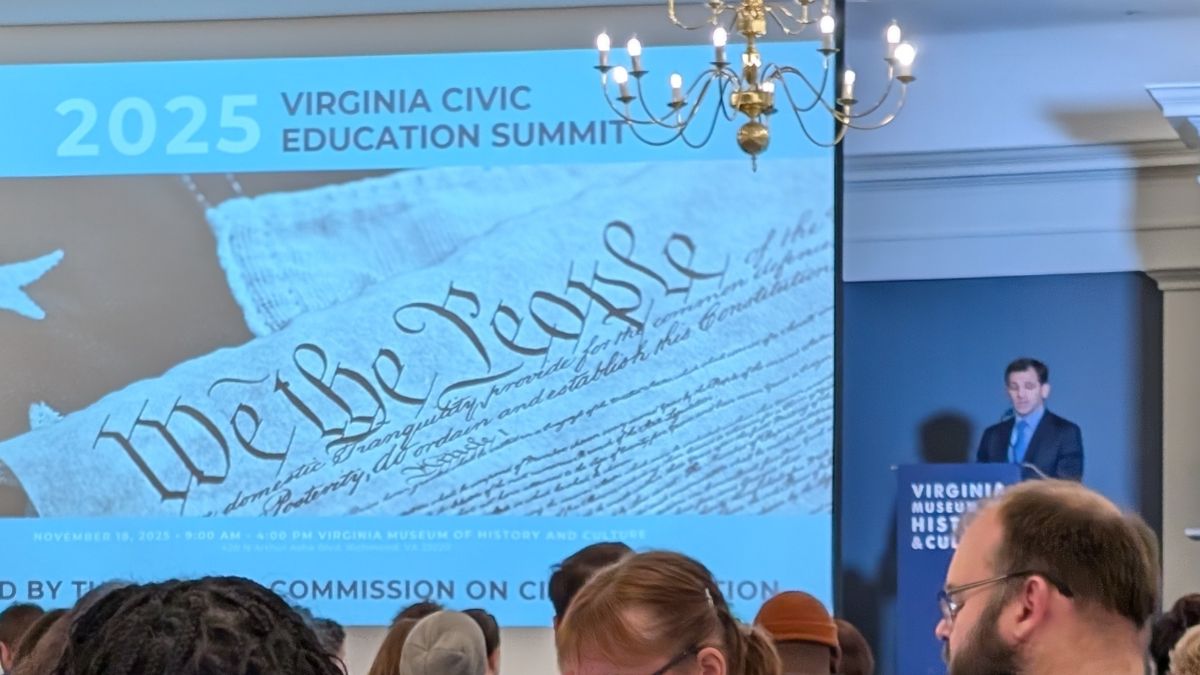
Last week, I enjoyed meeting so many friendly faces—both familiar and new—from all across the Commonwealth at the annual Virginia Civic Education Summit. Hosted by the Commission on Civics Education at the Virginia Museum of History and Culture in Richmond, the energy in the room was palpable.

The summit focused heavily on media literacy in civics education. If you missed it, here are five main takeaways from the speakers at the summit:

Distinguish Commentary from Reporting

It is vital for educators and learners alike to question media sources by asking, Is this political commentary or reporting? It’s important to note the distinction, as it is often not as clear as it once was. Nowadays, television personalities like Sean Hannity and Rachel Maddow blur the lines between opinion and fact.

Independence Over Objectivity
Not all journalists blur those lines. Peter Baker, a journalist and author whose coverage has spanned six presidencies from Clinton to Trump, shared that he intentionally doesn’t read editorials. This allows him to maintain independence and focus strictly on the facts in his reporting.

Baker highlighted key lessons: Reporting is more about independence than objectivity. Everyone has a bias—implicitly in what they choose to share and explicitly in how they cover a story. The role of the press is to hold power accountable, even though we, as consumers, often prefer comfortable echo chambers that validate what we already believe. To learn is to be uncomfortable; it requires challenging assumptions and substantiating claims with evidence.

The Changing Landscape of News
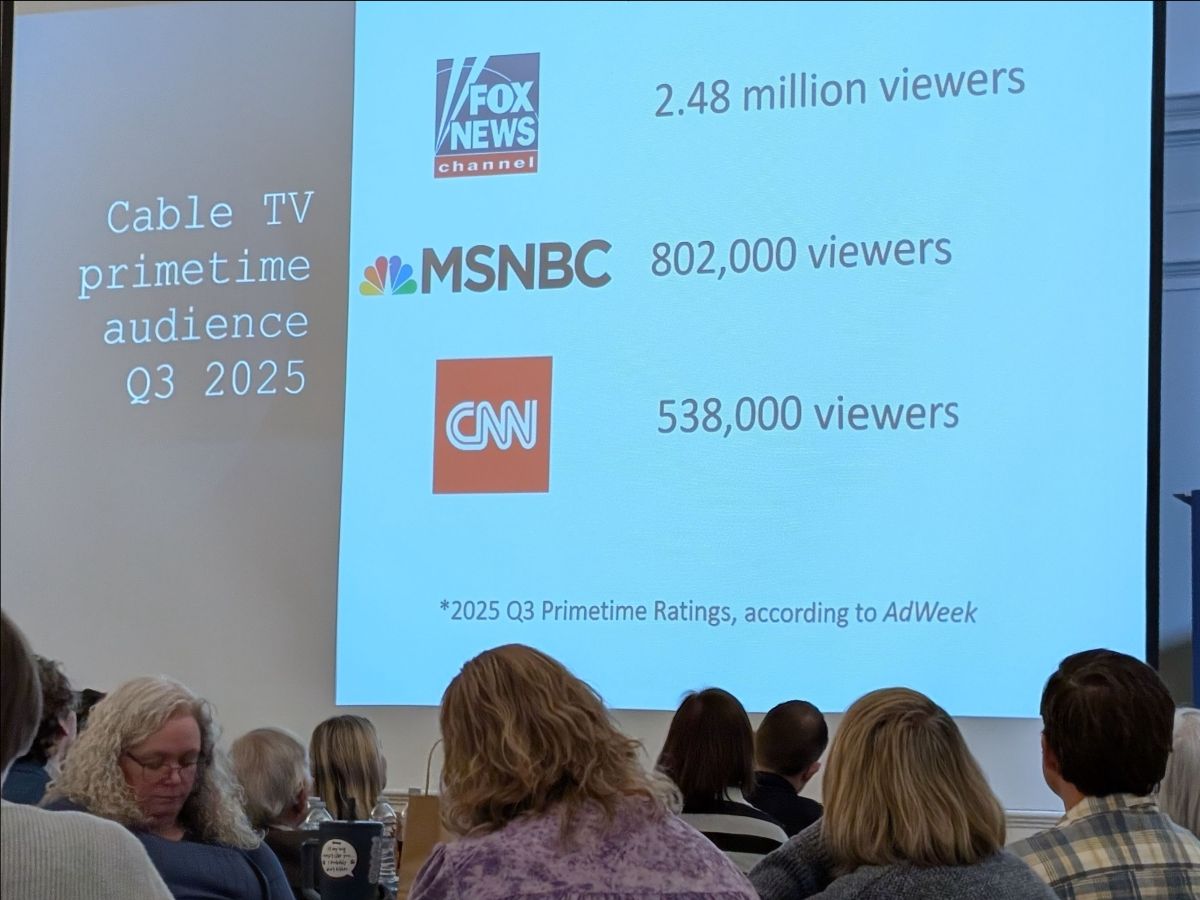
Jayme Swain, President and CEO of VPM, noted that the influence of major networks isn’t as wide as you might think. There are more than 250 million people over the age of 18 in the United States, but only a small fraction of them watch news outlets like Fox and MSNBC. To understand the current landscape, we have to "follow the money," look at news marketing, and acknowledge the alarming trend of dwindling local news sources.

Spotting "Pink Slime"
If you’re not sure if a piece of media is high quality -- or “pink slime” news masquerading as journalism --, check to see if the site has a content policy and a history of correcting the record. Real journalists make mistakes, but they are transparent in admitting them.

Note: For VPAP’s VaNews roundup of daily headlines, we maintain a detailed content policy focused on providing news about Virginia government and politics from high-quality sources.

Explore VPAP's VaNews

There is Hope (And Work to Do)
In that packed conference hall, I could feel a dual sentiment: the stress educators feel teaching young folks in an environment that is overwhelmingly information-heavy yet discernment-deprived, and simultaneously, a deep yearning for resources to improve their craft.

Teachers care. Students care. There is hope.

We all have to do the work of improving our media literacy skills by questioning the sources of our political information, especially as the distribution of misinformation grows. Our republic depends on it. Like training any other muscle, exercising media discernment is tough work. By making time to strengthen our habits and, on occasion, sit with the discomfort that comes with learning, we can move toward a vibrant, healthy representative democracy.

Thanks for being a part of the Civics Navigator community.

Sincerely,
Erin Hill
Civics Education Program Director

Connect with Us!

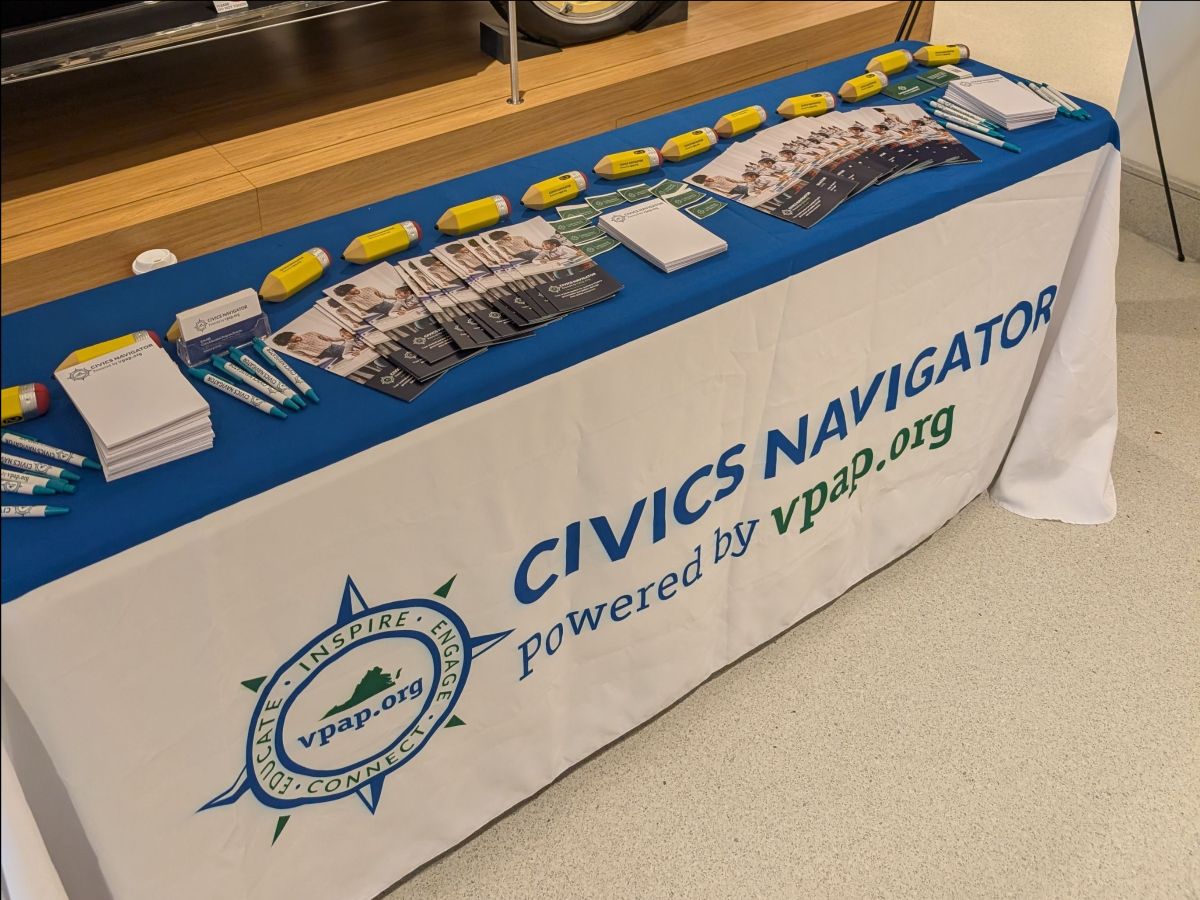
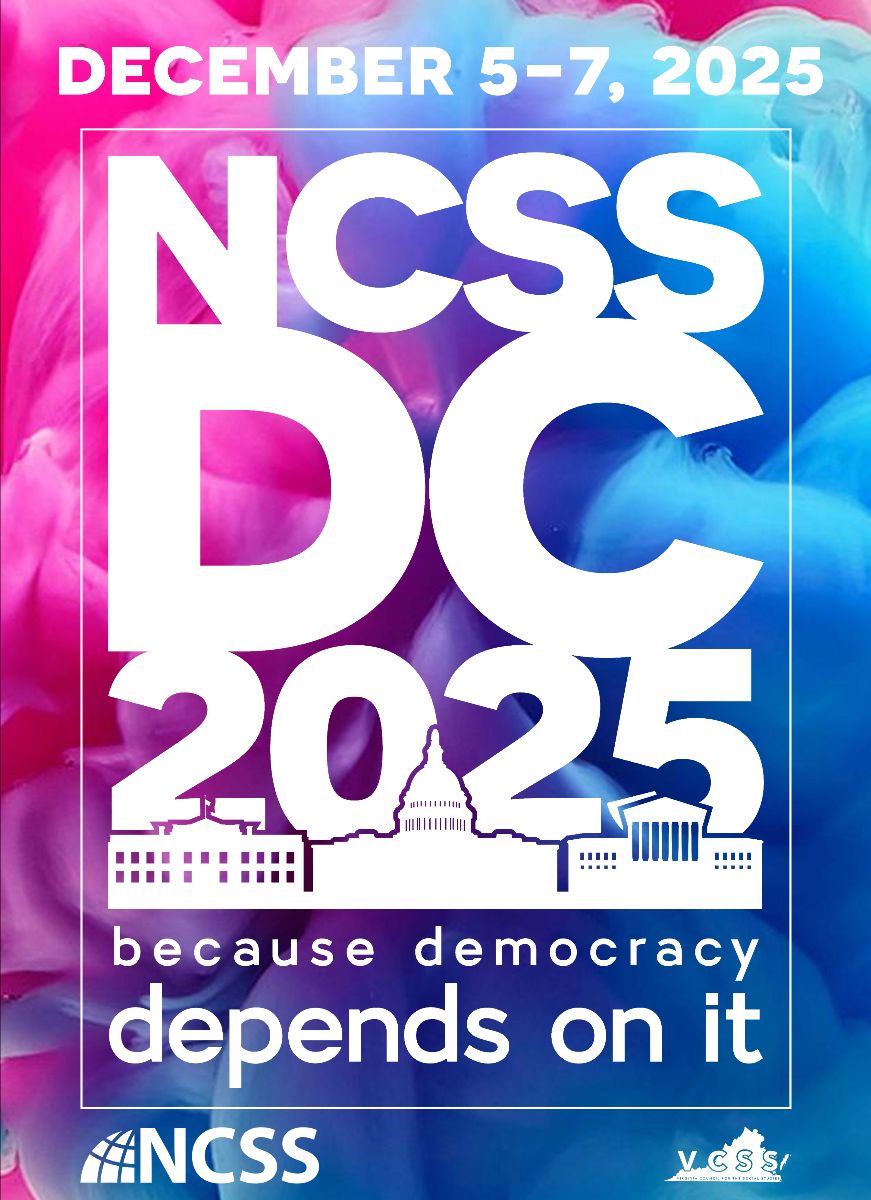
We'll be presenting at two upcoming conferences in December. We hope to see you there!

NCSS (National Council for the Social Studies) in Washington, DC

  • Building Constitutional Confidence: A Teacher-Led Forum
  • Dec 6 @ 4:05pm

VATLL (Virginia Teaching Learning Leading) in Williamsburg

  • Your Blueprint for Impact: Navigating Virginia’s Next Chapter
  • Dec 11 @ 8:15am
Civics Education Events

Know a Friend Who Would Enjoy Civics Navigator?


Share

Thanks for being part of the Civics Navigator community!